The conversation about Christianity and rap may be a bit old hat by now, but that hasn’t stopped me from wrestling with it. Ever since becoming a Classical Christian educator, I have been particularly bothered by what to do with rap. I listened to Lecrae in middle school, and I dabbled in secular rap before coming to Christ. I learned to really enjoy it all, but when most of the older and wiser generations have expressed widespread contempt for it, it’s hard to be confident: “The lyrics are too fast,” “It’s too rough,” “It’s too worldly,” “It’s not even music!”
Especially disorienting have been some of the conversations I’ve had with younger listeners: people listening to pretty rough secular rap insisting the profanity, the misogyny, the violence, and the materialism “doesn’t affect them.”
I’ll never forget a conversation I had with a seminary friend:
“Have you heard the new Kendrick album?” he asked.
“No. No, I have not.”
“You should listen to it, man. It’s a gospel album. Like it’s his conversion story.”
“…Kendrick Lamar’s?”
“Yeah.”
“….are you sure you mean Kendrick Lamar?”
“Yeah, man. To Pimp a Butterfly is God’s music.”
The rap thing gets a little bizarre. To be fair, there’s a lot going on in a conversation calling an album with 300+ expletives “gospel music.” And worldliness creeping into Christian spheres is nothing new. But it has bothered me that Christian rap seems particularly likely to share the vices of its secular counterpart. It is “toned down,” but it doesn’t take long to find profanity, violence, sex, and materialism (and some seriously wack theology) cropping up in the Christian scene.1 2 3 4 It can be hard to listen to Christian rap with my kids in the room.
But rap has something really cool going for it, too. In college, a friend and I came up with our “5 Ms of Music Appreciation.” In a past article, I talked about dc Talk’s musical iMagination (forgive us; we tried). Here, I offer that rap has a particular capacity to maximize Meaning. And so, though at this point I say with confidence that modern hip-hop culture as a whole is toxic,5 6 the rap form is something to celebrate, even for Classical educators.
I would say rap is, strictly speaking, more of an art form than actual music. You can hum or sing music; you can’t really hum or sing rap. It is poetry set to a (usually simple) track. That’s not a diss; it only makes rap a unique form of art. It is because of its nature as poetry that rap is so potent. The wordplay and bending of words makes it fun and interesting. The rhythm and rhyme, the assonance and alliteration make it artistic. But most important for the present conversation, rap has “words, words, words.”
Not only does rap contain more words per average song compared to other genres, but rap has an absolutely incredible comparative vocabulary, as well.7 This means rap has the space and lyrical chops to pack in a lot of truth and rich theological exploration, when it wants to.
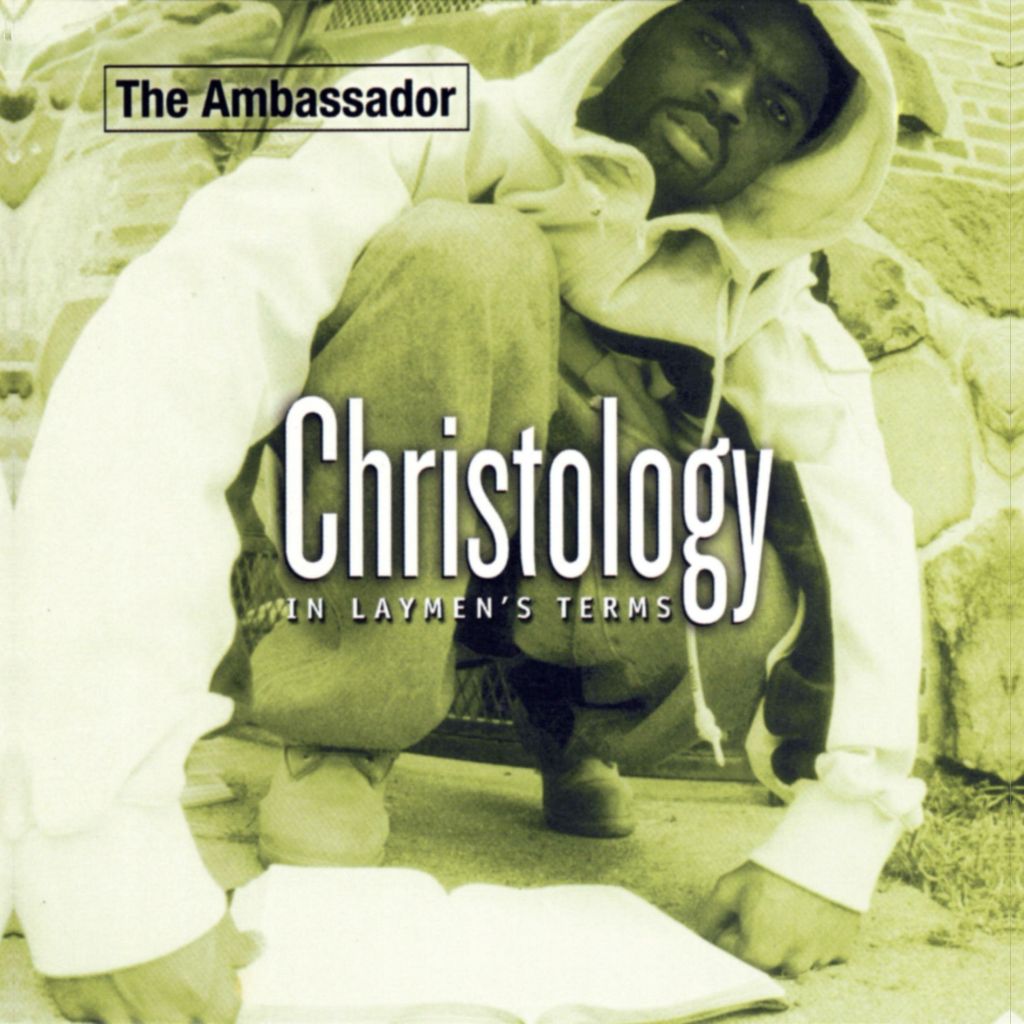
Take, for example, my absolute favorite rap album, The Ambassador’s Christology in Laymen’s Terms. Even the album’s title tells you it has something deeper to offer than the typical Christian radio jingle. Consider lyrical samples from four songs on the album. This first one is from “Loophole” (I’ve done my best to highlight the playful rhythm of delivery):
You’re born, you suffer, you die
Ever ask why?
That’s the task I
have
I’m coming just as I
am
My plan is
to help the planet
understand this:
Man is
under the 2nd law of thermodynamics
Which means
at the seams
everything
falls apart
Genesis 3
says the Fall’s the start
Now I’m called to spark
hope in an ugly
World rougher than rugby
Where stuff be making it hard to say
Jesus Loves Me
Leaving aside the deft delivery, on display here are the problem of pain, evangelism, entropy, the Fall, and the difficulty of living as a Christian in light of all these realities. And that’s just half of the first verse.
Here’s a sample from “Apologetics”:
Now will the real Jesus please stand up?
Wait
There’s eight of ’em
Nine of ’em
A whole line of ’em
There’s all kinds of ’em
Is it the one with dreads?
Or the blond head?
The one with blue eyes?
Or the one hangin’ between those two guys?
Or the one that they say is just a prophet
He’s nothing special
He’s just the one before Mohammed
Or the archangel
Or the man healin’ on T.V
Or the other cat that’s leading masses up to D.C
Or is He?
The eternal God of all creation
Lord of all the nations
The Sovereign
Even the Boss of Satan
The One making
The world spin
Keeping high winds twirling
While He’s getting it on in the whirlwind
Again, there’s the playful (a reference to Slim Shady for those listening from the world). But there’s also a representation of a real struggle to know how to think about Jesus: Was he African or European? A man, a prophet, or an angel? Is he represented by the tele-evangelist faith-healer or the political-activist rally marchers? In other words, are the Rastas right about Jesus, or are the Renaissance artists? The atheists, Muslims, or Jehovah’s Witnesses? The word-of-faithers or the social justice warriors? With all the noise about who Jesus is, it can be hard to see the “real” Jesus: Lord of creation, sovereign over every political and spiritual power. It’s good stuff to consider.
“Psalm 23” gets into the mystery of the hypostatic union with plenty of lyrical charisma:
It's the supernatural stuff, all about His blood like we're Dracula
With spectacular, spiritual vernacular
Like the concept of the hypostatic union coming smack-atcha
I know it's deep and when you peep, you'll find it's dense
Jesus both God and Man, two hundred percents
And finally, from “Whirlwind,” we’re treated with the mystery of the Trinity, the incarnation, Christ’s death, burial, and resurrection, Pentecost, the potency of God’s word, God as sovereign Creator, and His being worthy of worship, with some Hebrew and Latin and a reference to Patrick Swayze thrown in for good measure:
I’m triune in my Person and my tactics
One in my essence, mentally you can’t hack this
I’m so divine, I can blow your mind with a mystery
My incarnation was an invasion into history
I put a human suit on and played it low key
Thirty-three years of blood, sweat and tears, now you owe Me
Capital Son of God saves, three days in the grave, then I was raised
From the earth I was “Swaze”
Sent My third Person to get with you, fix you
Get you right, shed some light, illuminate My Scripture
I’ve got the word that bara’s ex nihilo
Creates something out of nothing now let’s see you go
Toe to toe, with the master Architect and Sculptor
Of the planet, of the people, even of its culture
I rule, earth is My footstool
Heaven can’t contain My frame, I’m sovereign and I can put fools
On their back, the fact is you’ll stand before Me
I’m coming for My props, you’ll stop, drop and glorify
All of these lyrics, of course, could be broken down much further. But leaving that to the listener is the fun and the benefit of the rap art form. Like all poetry, the rhythm, repetition, reticence, rhyme, imagery, and figurative language of rap have the power to make the truths that are communicated indelibly engraven on the heart of the hearer.8
Rap is a powerful art form. One can take issue with the improper English if they want, but one can’t accuse the artists of being unintelligent. They are masters of “words, words, words,” and, at their best, they import threefold meaning into their works as a result, to the glory of God.
- Check out, for example, this article from 2017. ↩︎
- According to one study, hip-hop mentions sex more than any other genre. ↩︎
- This article confirms that hip-hop features more expletives than any other genre. ↩︎
- This article talks about the proneness (and reason for) materialistic lyrics in rap songs. ↩︎
- Because of this, to put it briefly, rap is about the only genre that I will no longer touch in the secular world. It is incredible how worldly and outright sinful it is. Give me Christian rap or give me death. ↩︎
- The history of hip-hop is fascinating. Rap was never squeaky clean, to my knowledge, but then again, it was born in a tense urban environment. There’s much to explore on this topic, but suffice it to say that it had decent roots, and things went south along the way. For a taste of the full story, TED Talks aren’t a bad place to start: check out Hip-Hop & Shakespeare? Akala at TEDxAldeburgh and Lecrae’s TedX Heroes and Villains: Is hip-hop a cancer or a cure?. ↩︎
- Check out this article (and this one, too!) ↩︎
- I stole this from a catechism published in the 1800s, which I have not been able to track down again. ↩︎


Leave a reply to The “Best” Christian Albums – Videre Recte Cancel reply